
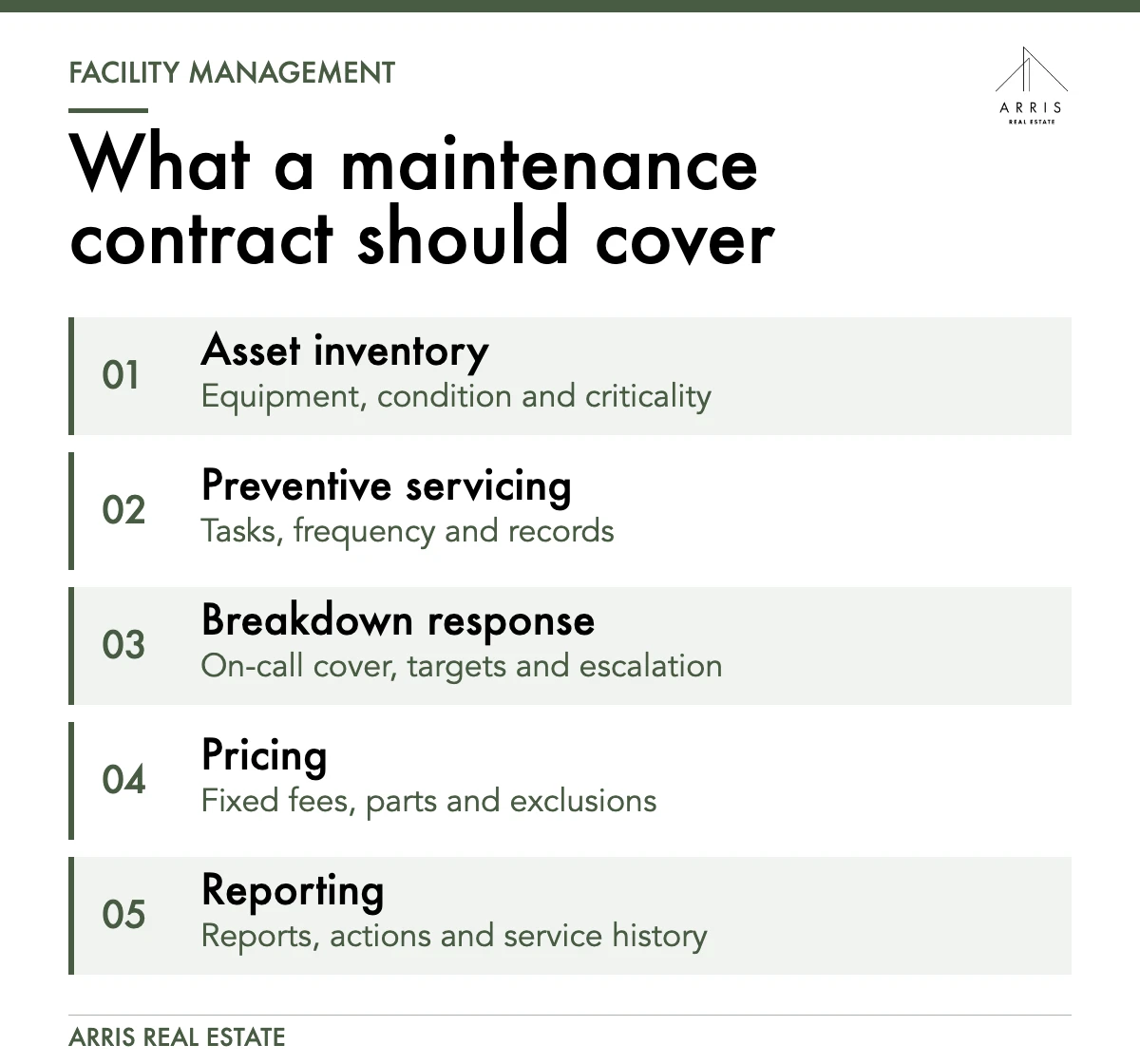
Agree on the equipment inventory
Walk through the building with the provider. Record each asset’s location, condition and importance to operations. The list may cover air conditioning, electrical distribution, generators, pumps and, where relevant, lifts and safety systems. Flag equipment under warranty and inspections requiring a qualified specialist.
Specify preventive and corrective work
Attach a schedule showing what will be done, how often and how work will be documented. Define how faults are logged, escalated and approved, including any after-hours coverage. Set separate expectations for acknowledgement, attendance and restoration of service.
Clarify what the price includes
Ask whether labour, consumables, replacement parts, travel and after-hours call-outs are included. Agree when a separate quotation is needed, who can approve it and how urgent work is authorised. Identify major replacements and specialist inspections separately.
Ask for reporting you can act on
Keep an intervention log and require periodic reports showing planned and completed work, recurring faults and open repairs. Assign each action an owner and due date. Track actual response times and the share of preventive work completed on schedule.
Plan mobilisation and handover
Agree how existing defects will be handled and which records are needed at mobilisation. At contract end, require the work history, updated inventory and relevant plans so the next provider can keep the building running.
What to prepare
- Building type, location and operating hours
- Equipment inventory and recurring faults
- Preventive and corrective work scope
- Response targets by priority
- Pricing, exclusions and reporting format
Discuss a maintenance mandate
Select Facility Management and share the site, the equipment to cover and any business continuity requirements.
Discuss a maintenance mandate →Explore Facility Management →